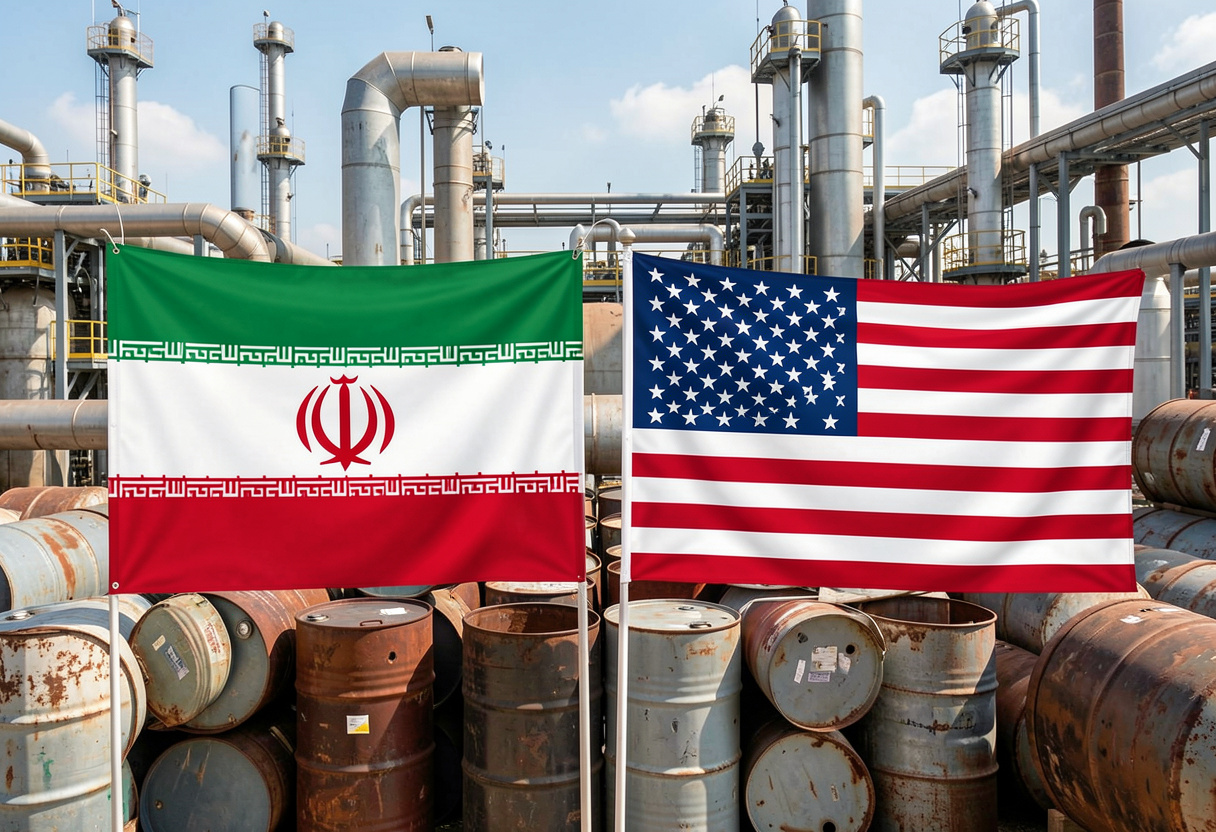
US-Iran Tensions, OPEC+ Plans: What's Next for Global Oil?
The global oil market consistently navigates a complex web of geopolitical risks, supply-demand dynamics, and economic forecasts. Recently, the spotlight has been firmly fixed on two pivotal developments: the renewed diplomatic efforts between the United States and Iran concerning Tehran's nuclear program, and the strategic decisions facing the OPEC+ alliance regarding future oil production. These two forces, though distinct, are intricately linked, creating a volatile yet compelling landscape for crude prices.
As Washington and Tehran cautiously approach crucial dialogues, global oil prices have shown a tendency to drift sideways, reflecting a cautious market sentiment. This equilibrium, however, is delicate. Concerns about potential disruptions to oil flows from the Middle East, fueled by lingering US-Iran tensions, provide an underlying support for prices. Simultaneously, the OPEC+ coalition is contemplating an increase in output from April to accommodate the anticipated surge in summer demand, adding another layer of complexity to the market's future trajectory. Understanding how these factors coalesce is key to predicting what's next for global oil, with us-iran talks oil implications at the very core.
The Geopolitical Tightrope: US-Iran Negotiations and Oil Flows
The renewal of negotiations between the United States and Iran represents a significant, albeit fraught, diplomatic chapter. After years of heightened animosity and the looming threat of military confrontation, both nations have returned to the negotiating table, primarily aiming to address Tehran's nuclear ambitions and potentially avert further escalation. These high-stakes discussions, sometimes mediated by third parties like Oman, carry immense weight for the global energy landscape.
Historically, any hint of progress or breakdown in US-Iran relations has sent ripples through the oil markets. For instance, past comments by US officials suggesting a potential deal could be reached within a month have, at times, driven down prices, signaling a belief that Iranian oil could re-enter the global supply. Conversely, persistent tensions and the possibility of supply disruptions in the Strait of Hormuz – a critical chokepoint for global oil shipments – have historically kept a floor under crude prices, forming what analysts refer to as a "geopolitical premium."
Iran, for its part, is pursuing an agreement that offers tangible economic benefits. Beyond the immediate nuclear program, discussions reportedly include potential investments in Iran's energy and mining sectors, as well as aircraft purchases. For Western observers, the prospect of Iranian crude returning to international markets, even if phased, is a significant supply-side consideration. However, market experts like IG's Tony Sycamore have cautioned that with both sides likely to adhere to their core red lines, expectations for a swift resolution remain low, leading to a sense of "calm before the storm." This delicate balance means that Oil Prices Drift Ahead of US-Iran Nuclear Talks: Market Impact, reflecting the inherent uncertainty.
OPEC+'s Balancing Act: Meeting Demand Amidst Uncertainty
Against this backdrop of geopolitical intrigue, the Organization of the Petroleum Exporting Countries and its allies (OPEC+) are meticulously planning their next moves. Having implemented significant production cuts and, more recently, a three-month halt to increases, the coalition is now leaning towards a resumption of output hikes from April. The primary driver behind this shift is the anticipation of robust demand during the peak summer months, especially as global economies continue their post-pandemic recovery trajectory.
The market's reaction to these reports has been generally positive, suggesting that investors view a managed increase in supply as a healthy response to rising demand. However, the unique circumstances of the current market – particularly the geopolitical premium supporting crude prices – cannot be overstated. As Sycamore noted, without this underlying geopolitical support, crude oil prices, particularly for benchmarks like WTI, would likely be trading significantly lower, potentially below $60 a barrel. This highlights OPEC+'s delicate balancing act: increasing supply to meet demand without flooding a market that already has an inherent price floor due to external tensions.
OPEC+'s strategy involves continuous assessment of several factors: the pace of global economic growth, demand recovery in key regions like Asia and Europe, inventory levels, and the trajectory of non-OPEC supply. Their decisions are not just about barrels but about maintaining market stability and ensuring fair returns for producers while preventing price spikes that could derail global economic recovery.
Sanctions and "Shadow Fleets": A Persistent Pressure Point
Further complicating the US-Iran diplomatic landscape are the persistent economic sanctions imposed by the United States. Even as talks between US and Iranian officials unfold, such as recent dialogues in Oman aimed at easing tensions, Washington continues to exert financial pressure. This was starkly evident when the US State Department announced new sanctions targeting a vast network involved in moving Iranian oil, directly impacting Tehran's ability to finance its operations.
These latest measures specifically targeted 15 entities, 14 vessels, and two individuals, collectively described as Tehran’s "shadow fleet." This covert shipping network is crucial for Iran to evade international sanctions and continue exporting its crude. According to the US government, the income generated from these illicit oil sales is used to bankroll various destabilizing activities across the region, including supporting terrorist groups. The State Department emphasized that "Instead of investing in the welfare of its own people and crumbling infrastructure, the Iranian regime continues to fund destabilizing activities around the world and step up its repression inside Iran."
The timing of these sanctions – immediately following talks – underscores the multifaceted and often contradictory nature of US foreign policy towards Iran. It suggests a "dual track" approach: engaging in diplomacy while simultaneously applying economic pressure to limit Iran's revenue streams. This strategy, though contentious, is meant to signal that economic consequences for certain Iranian actions will persist regardless of the diplomatic overtures. For a deeper understanding of these measures, refer to this related article: US Sanctions Iranian Oil Network Amidst Nuclear Negotiations.
Navigating the Volatility: Outlook for Global Oil Markets
The path forward for global oil markets is fraught with both opportunities and risks. The interplay of US-Iran negotiations, OPEC+'s production strategy, and the ongoing impact of sanctions creates a dynamic environment that demands careful monitoring from investors, policymakers, and consumers alike.
- Geopolitical Risk Remains Paramount: Any significant development in US-Iran relations – whether a breakthrough or a breakdown – will have immediate and profound effects on oil prices. A comprehensive deal could eventually bring more Iranian crude to market, potentially easing prices. Conversely, an escalation of tensions could lead to supply disruptions and a sharp increase in costs.
- OPEC+ Flexibility is Key: The alliance's ability to adjust production in response to demand fluctuations and geopolitical events will be crucial. Their current lean towards increasing output signals confidence in demand recovery, but this could be altered if global economic headwinds strengthen or if geopolitical risks intensify.
- Sanctions as a Constant Variable: The US's continued enforcement of sanctions against Iran's oil network means that even in the event of diplomatic progress, the full return of Iranian crude to pre-sanction levels will likely be a prolonged and negotiated process. This prevents a sudden glut of supply.
- Demand Recovery and Economic Growth: The underlying strength of global oil demand, driven by post-pandemic economic recovery and increasing travel, will continue to be a fundamental price driver. Muted activity in major financial markets due to holidays, as seen recently in China, South Korea, and Taiwan, can also temporarily affect trading volumes and price movements.
For market participants, practical advice includes maintaining vigilance on headlines related to the us-iran talks oil implications, closely following OPEC+ ministerial meetings, and analyzing demand forecasts. Diversifying portfolios and employing robust risk management strategies are also prudent given the inherent volatility of the current market.
Conclusion
The global oil market stands at a critical juncture, influenced by a confluence of diplomatic efforts, strategic supply management, and persistent economic pressures. The delicate dance between US-Iran negotiations and the forward-looking plans of OPEC+ will largely dictate the direction of crude prices in the coming months. While the immediate outlook suggests a market caught between geopolitical tensions providing a price floor and anticipated demand growth warranting increased supply, the potential for sudden shifts remains high. As such, all eyes will remain fixed on Geneva, Vienna, and other diplomatic venues, as the world awaits clarity on what's next for this indispensable commodity.